


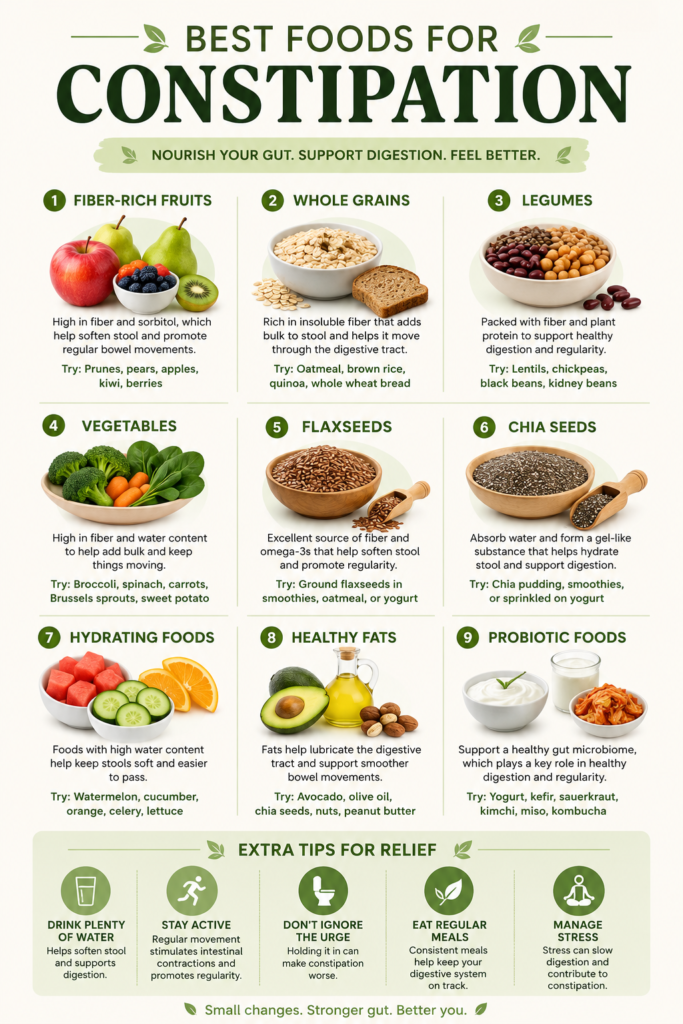
Constipation is one of the most common digestive problems affecting people of all ages. It occurs when bowel movements become infrequent, difficult, or painful to pass. While occasional constipation is usually not a serious concern, chronic constipation can significantly affect quality of life, causing discomfort, bloating, abdominal pain, and frustration.
Many factors contribute to constipation, including inadequate fiber intake, dehydration, lack of physical activity, certain medications, stress, and underlying medical conditions. Fortunately, dietary changes are among the most effective and natural ways to improve bowel regularity and support healthy digestion.
The foods we eat play a crucial role in maintaining proper bowel function. Fiber-rich fruits, vegetables, whole grains, legumes, seeds, healthy fats, and probiotic foods can all help promote regular bowel movements and improve gut health. By incorporating these foods into your daily diet, you can often prevent or relieve constipation without relying heavily on medications.
This comprehensive guide explores the best foods for constipation, how they work, and practical ways to include them in your meals.
Understanding Constipation
Constipation is generally defined as having fewer than three bowel movements per week or experiencing difficulty passing stool. Common symptoms include:
- Hard, dry stools
- Straining during bowel movements
- Feeling of incomplete evacuation
- Abdominal discomfort
- Bloating
- Reduced bowel frequency
A healthy digestive system requires adequate hydration, sufficient dietary fiber, regular physical activity, and a balanced gut microbiome. When one or more of these factors are lacking, constipation may develop.
The Importance of Dietary Fiber
Fiber is perhaps the most important nutrient for preventing and relieving constipation. It is a type of carbohydrate that the body cannot fully digest.
There are two main types of fiber:
Soluble Fiber
Soluble fiber absorbs water and forms a gel-like substance in the digestive tract. This helps soften stool and makes it easier to pass.
Sources include:
- Oats
- Apples
- Pears
- Citrus fruits
- Beans
- Flaxseeds
Insoluble Fiber
Insoluble fiber adds bulk to stool and helps food move more quickly through the digestive system.
Sources include:
- Whole grains
- Vegetables
- Nuts
- Seeds
- Wheat bran
A combination of both types of fiber is ideal for digestive health.
1. Fiber-Rich Fruits
Fruits are among the best natural remedies for constipation because they contain fiber, water, vitamins, minerals, and beneficial plant compounds.
Prunes
Prunes are often considered the gold standard for relieving constipation. They contain fiber and sorbitol, a natural sugar alcohol that draws water into the intestines and helps soften stool.
Pears
Pears are rich in both soluble and insoluble fiber. They also contain sorbitol, making them highly effective for promoting bowel regularity.
Apples
Apples provide pectin, a soluble fiber that supports healthy digestion and improves stool consistency.
Kiwi
Research suggests that kiwi fruit may improve bowel frequency and stool softness due to its fiber content and digestive enzymes.
Berries
Strawberries, raspberries, blackberries, and blueberries contain significant amounts of fiber while also providing antioxidants that support overall health.
2. Whole Grains
Whole grains retain their bran and germ layers, making them rich sources of fiber.
Oatmeal
Oatmeal contains beta-glucan, a type of soluble fiber that helps improve stool consistency and digestive health.
Brown Rice
Unlike white rice, brown rice contains fiber-rich bran layers that support regular bowel movements.
Whole Wheat Bread
Whole wheat bread provides insoluble fiber that adds bulk to stool and stimulates intestinal movement.
Quinoa
Quinoa is a nutrient-dense grain containing fiber, protein, vitamins, and minerals that support digestive wellness.
Barley
Barley contains both soluble and insoluble fiber, making it beneficial for bowel regularity.
3. Legumes
Legumes are excellent sources of dietary fiber and plant protein.
Lentils
Lentils contain large amounts of fiber that help increase stool bulk and improve bowel movement frequency.
Chickpeas
Chickpeas support digestive health by providing fiber and resistant starch that nourish beneficial gut bacteria.
Black Beans
Black beans promote healthy digestion and contribute to regular bowel movements.
Kidney Beans
Kidney beans provide both soluble and insoluble fiber, supporting overall gastrointestinal function.
Split Peas
Split peas are another highly effective legume for increasing daily fiber intake.
4. Vegetables
Vegetables provide fiber, water, vitamins, minerals, and antioxidants that support digestive health.
Broccoli
Broccoli contains fiber and compounds that support a healthy digestive system.
Spinach
Spinach provides magnesium and fiber, both of which may help relieve constipation.
Carrots
Carrots are rich in fiber and can contribute to healthier bowel movements.
Brussels Sprouts
These vegetables contain significant amounts of fiber and nutrients beneficial for gut health.
Sweet Potatoes
Sweet potatoes provide fiber and water, helping soften stool and support regularity.
Green Beans
Green beans are easy to incorporate into meals and contribute valuable fiber.
5. Flaxseeds
Flaxseeds are among the most effective foods for relieving constipation.
Benefits of Flaxseeds
- Rich in soluble and insoluble fiber
- Help soften stool
- Promote regular bowel movements
- Support healthy gut bacteria
Ground flaxseeds are generally easier to digest and more beneficial than whole flaxseeds.
How to Use Flaxseeds
Add ground flaxseeds to:
- Smoothies
- Yogurt
- Oatmeal
- Soups
- Baking recipes
6. Chia Seeds
Chia seeds absorb water and form a gel-like texture that helps keep stool soft and easy to pass.
Benefits
- Extremely high in fiber
- Improve stool hydration
- Support gut health
- Easy to incorporate into meals
Ways to Enjoy Chia Seeds
- Chia pudding
- Smoothies
- Yogurt toppings
- Oatmeal additions
Always consume chia seeds with adequate fluids.
7. Hydrating Foods
Hydration is essential for preventing constipation. Without enough water, stool becomes hard and difficult to pass.
Watermelon
Watermelon contains over 90% water and contributes to hydration.
Cucumber
Cucumber is low in calories and rich in water content.
Oranges
Oranges provide water, fiber, and vitamin C.
Celery
Celery supports hydration while contributing dietary fiber.
Lettuce
Lettuce is another water-rich vegetable that can support bowel health.
8. Healthy Fats
Healthy fats can help lubricate the digestive tract and support smoother bowel movements.
Avocados
Avocados are rich in fiber and healthy monounsaturated fats.
Olive Oil
Olive oil may help soften stool and support intestinal function.
Nuts
Almonds, walnuts, and pistachios provide healthy fats and fiber.
Nut Butters
Natural peanut butter and almond butter can contribute to digestive wellness when consumed in moderation.
9. Probiotic Foods
A healthy gut microbiome is essential for regular bowel movements.
Yogurt
Yogurt containing live cultures may improve bowel function.
Kefir
Kefir is a fermented dairy beverage rich in beneficial bacteria.
Sauerkraut
Fermented cabbage provides probiotics that support digestive health.
Kimchi
Kimchi contains beneficial microbes and fiber.
Miso
Miso is a fermented soybean product that contributes to gut health.
Additional Lifestyle Tips for Constipation Relief
Drink Plenty of Water
Adequate hydration is essential for fiber to work effectively.
Stay Physically Active
Exercise stimulates intestinal contractions and promotes regular bowel movements.
Don’t Ignore the Urge
Responding promptly to the urge to have a bowel movement helps prevent constipation.
Eat Regular Meals
Consistent meal timing can help regulate digestive function.
Manage Stress
Stress can affect digestion and contribute to bowel irregularities.
Foods That May Worsen Constipation
Certain foods may contribute to constipation when consumed excessively:
- Highly processed foods
- Fast food
- Excessive cheese
- Refined grains
- Sugary snacks
- Low-fiber diets
Balancing these foods with fiber-rich options can help maintain digestive health.
Sample One-Day Meal Plan for Constipation Relief
Breakfast
Oatmeal topped with chia seeds, berries, and sliced pear.
Mid-Morning Snack
Kiwi fruit and a glass of water.
Lunch
Mixed vegetable salad with chickpeas, olive oil dressing, and whole grain bread.
Afternoon Snack
Yogurt with ground flaxseeds.
Dinner
Grilled fish, brown rice, broccoli, and spinach.
Evening Snack
Prunes and herbal tea.
When to Seek Medical Advice
While dietary changes can help many people, medical evaluation is important if constipation is accompanied by:
- Blood in the stool
- Unexplained weight loss
- Severe abdominal pain
- Persistent symptoms
- Sudden changes in bowel habits
These symptoms may indicate an underlying condition requiring professional care.
Conclusion
Constipation is a common but manageable digestive issue. A diet rich in fiber, water, healthy fats, and probiotic foods can significantly improve bowel regularity and overall gut health. Fruits such as prunes, pears, apples, and kiwi, along with whole grains, legumes, vegetables, flaxseeds, chia seeds, and fermented foods, are among the most effective natural remedies.
Combining these foods with adequate hydration, regular exercise, stress management, and healthy lifestyle habits creates a comprehensive approach to digestive wellness. Small, consistent dietary improvements can lead to long-term relief from constipation and better overall health.