
Ear wax removal is a common health topic in the United States. Most people produce earwax naturally, and in normal amounts, it is actually beneficial. Earwax helps protect the ear canal from dust, debris, microorganisms, and irritation. In many cases, the ears are self-cleaning and do not require routine cleaning.
Problems can occur when earwax builds up and becomes impacted. Impacted earwax may cause a blocked or full sensation, temporary hearing loss, ringing in the ear, itching, or discomfort. Many people try to remove earwax with cotton swabs, but inserting objects into the ear canal can push wax deeper and potentially injure the ear.
Understanding how earwax works and knowing when removal is actually necessary can help you protect your hearing and avoid unnecessary ear injuries.
This complete guide explains what earwax is, why it builds up, safe ear wax removal methods, what to avoid, symptoms of impacted earwax, and when professional medical care is recommended.
What Is Earwax?
Earwax, medically known as cerumen, is a natural substance produced by glands in the ear canal.
It consists of secretions from glands mixed with dead skin cells, hair, and other material found in the ear canal.
Although some people consider earwax dirty, it serves several useful functions.
Earwax can:
- Protect the ear canal
- Trap dust and debris
- Help prevent dryness
- Provide some protection against microorganisms
- Lubricate the skin of the ear canal
- Help move dead skin and debris toward the outer ear
The body normally moves older earwax toward the opening of the ear, where it can naturally fall away or be gently wiped from the outside.

- Cat and dog ear cleaner, soothes recurrent ear issues, itching and redness, for pets of all ages
- Relief from stubborn ear problem-causing microorganisms that form complex, irritating biofilms
- Gentle formula helps relieve painful ear issues caused by resistant germs, fungi and yeast

- 【Still hurting your ears with cotton swabs? 】Research shows cotton swabs are bad for removing earwax,they may further pu…
- 【Professional Earwax Removal Tools】 Each ear pick is extended and designed with double-head,and different ear scoops can…
- 【Ergonomic Design & Reusable & Washable】Ergonomic handle and groove on the each earpick is designed for anti-slip grip,m…
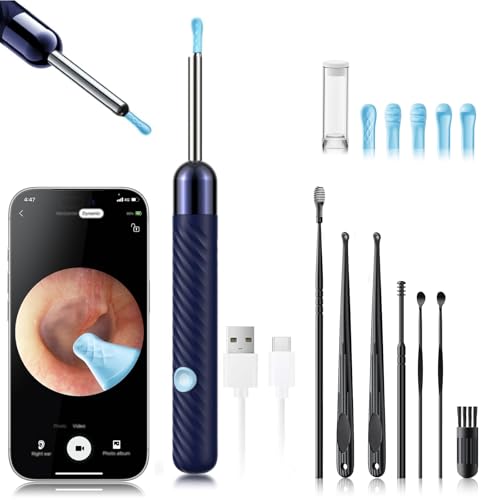
- 1080P HD Ear Camera: The earwax removal kit is equipped with 6 LED lights and a 1080P HD camera to help you see and clea…
- 3 Kinds of Radian Ear Scoop: Use a silicone ear scoop cover over the ear scoop to prevent scratching the ear canal. You …
- Easy to Use: The ear cleaner has a built-in 350mAh rechargeable battery, which can be used for 90 minutes after being fu…

- Wide Angle & 1080P HD Camera: Bebird R1 earscope has a 3 million pixels high precision lens with a wide-angle view, 6 LE…
- Intelligent Visible Bebird APP: Wi-Fi directly connects the earscope device and the Bebird application. Ear-care cleanin…
- Examine & Removal Ear Dirt Kits: Bebird R1 device as an ear examination tool with a camera to look and check the inside …

- Debrox Ear Wax Removal Drops use microfoaming action to gently soften and loosen excess ear wax, allowing it to easily d…
- This ear wax remover can relieve ears from excess ear wax caused by frequently wearing earbuds, in-ear headphones, heari…
- Debrox makes ear wax removal at home easy and safe these ear drops contain 6.5% carbamide peroxide to aid in the removal…
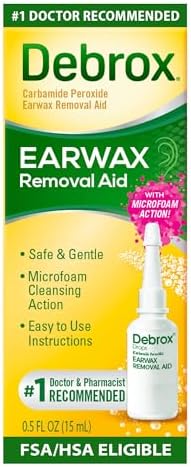
- Debrox Ear Wax Removal Drops use microfoaming action to gently soften and loosen excess ear wax, allowing it to easily d…
- This ear wax remover can relieve ears from excess ear wax caused by frequently wearing earbuds, in-ear headphones, heari…
- Debrox makes ear wax removal at home easy and safe these ear drops contain 6.5% carbamide peroxide to aid in the removal…
Do You Need to Remove Earwax?
Usually, no.
Healthy ears generally have a natural ear-cleaning system. The movement of the jaw during talking and chewing can help move earwax toward the outside of the ear canal.
If earwax is not causing symptoms or blocking the ear canal, there is usually no reason to remove it.
Routine deep cleaning may actually create problems by irritating the ear canal or pushing wax deeper.
The goal should not be to remove every trace of earwax. Instead, earwax should be removed when it becomes excessive, impacted, causes symptoms, or interferes with an examination or hearing device.
What Is Impacted Earwax?
Impacted earwax occurs when wax becomes tightly packed in the ear canal and cannot naturally move outward.
The wax may gradually accumulate or become pushed deeper into the canal.
Certain habits and circumstances can increase the likelihood of impaction.
For example, repeatedly inserting cotton swabs into the ear may push wax toward the eardrum instead of removing it.
Symptoms of Earwax Buildup
Not everyone with earwax buildup experiences symptoms.
When earwax becomes impacted, possible symptoms include:
- Muffled hearing
- Temporary hearing loss
- Feeling of fullness in the ear
- Ear blockage
- Itching
- Ear discomfort
- Ringing or buzzing
- Earache
- An unusual sensation in the ear
- Difficulty hearing conversations
Some people may notice that symptoms become more obvious after showering or swimming because water can become trapped around impacted wax.
Can Earwax Cause Hearing Loss?
Yes.
A significant wax blockage can prevent sound from traveling normally through the ear canal, resulting in temporary conductive hearing loss.
This type of hearing change often improves once the obstruction is safely removed.
However, hearing loss should never automatically be blamed on earwax.
Sudden or unexplained hearing loss can have other causes and may require urgent medical evaluation.
If hearing changes occur suddenly, especially in one ear, seek medical advice promptly rather than assuming that wax is responsible.
Ear Wax Removal at Home
Some people with mild earwax buildup may be able to use an over-the-counter earwax-softening product according to its label directions.
Common earwax-softening ingredients include products designed specifically for cerumen removal.
The purpose of these products is generally to soften or loosen wax so that it can leave the ear more easily or become easier for a healthcare professional to remove.
Always follow the product instructions and do not use a product if you have been advised that it is unsafe for your ears.
Ear Drops for Earwax Removal
Over-the-counter ear drops may help soften hardened earwax.
Different products use different ingredients and instructions, so read the label carefully.
Some products contain carbamide peroxide, which is specifically marketed for earwax removal.
Ear drops are not appropriate for everyone. People with a known or suspected perforated eardrum, ear tubes, significant ear pain, ear drainage, or certain ear conditions should seek medical advice before putting anything into the ear canal.
How to Use Earwax Drops
If an earwax-softening product is appropriate for you, use it exactly as directed on the package.
A general process may involve:
- Washing your hands.
- Following the product’s recommended dosage.
- Applying the drops carefully without inserting the applicator deeply into the ear.
- Allowing the product to remain in the ear for the recommended amount of time.
- Repeating only as directed.
Do not use more drops than recommended in an attempt to speed up the process.
If symptoms worsen, stop using the product and seek professional advice.
Can You Use Hydrogen Peroxide for Earwax?
Hydrogen peroxide is sometimes used in earwax-removal products, but concentrated or improperly used hydrogen peroxide can irritate the ear canal.
Commercial ear drops formulated for earwax removal are preferable to experimenting with household chemicals.
If you have ear pain, drainage, ear surgery history, tubes, or a possible eardrum perforation, consult a healthcare professional before using any ear drops.
Can You Flush Earwax Out?
Ear irrigation or ear flushing may be used in some situations to remove impacted wax.
However, irrigation is not suitable for everyone.
It may be inappropriate if there is:
- A perforated eardrum
- Ear tubes
- Certain previous ear surgeries
- Active ear infection
- Significant ear pain
- Other problems affecting the ear
For this reason, people should not assume that flushing the ear at home is always safe.
Healthcare professionals can determine whether irrigation is appropriate.
Ear Syringes and Ear Wax Removal Kits
Various ear-cleaning kits are sold in U.S. stores and online.
Some contain drops, irrigation devices, or specialized tools.
The fact that a product is marketed for ear cleaning does not mean it is appropriate for every person.
Inserting instruments into the ear canal can cause injury if they are used incorrectly.
If you have recurrent impaction or symptoms that do not improve with appropriate over-the-counter treatment, professional removal may be safer.
Ear Wax Removal by a Doctor
Healthcare professionals have several options for removing impacted earwax.
Depending on the circumstances, a clinician may use:
- Manual removal
- Suction
- Irrigation
- Specialized instruments
- A combination of methods
The choice depends on the amount and consistency of the wax, the condition of the ear canal, and whether there are other ear problems.
Professional removal can be particularly useful when wax is hard, deeply impacted, recurrent, or associated with symptoms.
Microsuction for Earwax Removal
Microsuction is a professional technique that uses a small suction device to remove earwax.
It may be performed by appropriately trained healthcare professionals or hearing and ear-care specialists, depending on local practice.
One advantage of suction-based removal is that it does not require water to be introduced into the ear canal.
However, its suitability depends on the individual ear and the provider’s assessment.
Manual Earwax Removal
A healthcare professional may use specialized instruments to carefully remove wax from the ear canal.
This method can be useful when the wax is located in a position that allows safe visualization and removal.
Because the ear canal and eardrum are delicate, manual removal should be performed by someone with appropriate training and equipment.
Ear Irrigation
Ear irrigation involves introducing a controlled stream of fluid into the ear canal to help remove wax.
It can be effective for some people with impacted cerumen.
However, improper irrigation can cause complications, including pain, infection, dizziness, or injury.
People with eardrum perforations, ear tubes, or certain ear conditions should not undergo irrigation without appropriate medical guidance.
Why You Should Avoid Cotton Swabs
Cotton swabs are one of the most common tools people use to clean their ears.
Despite their popularity, they are generally not recommended for inserting into the ear canal.
Cotton swabs can:
- Push wax deeper
- Pack wax against the eardrum
- Irritate the ear canal
- Cause small injuries
- Increase the risk of infection
- Potentially damage the eardrum
If you use cotton swabs, restrict their use to the outer ear rather than inserting them into the canal.
What About Ear Candling?
Ear candling is promoted online as a way to remove earwax, but it is not a recommended method.
The process involves placing a hollow candle near or inside the ear and lighting it.
Potential risks include:
- Burns
- Ear injury
- Candle wax entering the ear
- Fire hazards
- Damage to the ear canal
- Damage to the eardrum
There is also no reliable evidence that ear candling effectively removes impacted earwax.
It is safer to use evidence-based earwax management methods.
Can You Remove Earwax With Tweezers?
You should not insert tweezers, hairpins, keys, paper clips, or other objects into the ear canal.
Although these objects may appear useful for removing visible wax, they can scratch the delicate skin of the canal or injure the eardrum.
If wax is deeply impacted, professional removal is a safer option.
Natural Earwax Removal
Your ears have a natural mechanism for moving wax toward the opening of the ear.
For most people, the best approach is simply to leave the ear canal alone.
You can gently clean visible wax from the outer ear using a washcloth.
There is generally no need to insert anything into the canal to achieve a “deep clean.”
How Often Should You Clean Your Ears?
There is no universal schedule for ear cleaning.
Some people produce very little wax, while others naturally produce more.
If your ears are healthy and you have no symptoms, routine removal may not be necessary.
People who frequently experience earwax impaction may need periodic professional evaluation.
Why Does Earwax Build Up?
Several factors can contribute to earwax accumulation.
Narrow Ear Canals
People with naturally narrow or unusually shaped ear canals may be more prone to blockage.
Excessive Wax Production
Some people simply produce more earwax than others.
Cotton Swab Use
Repeated cleaning can push wax deeper into the ear canal.
Earbuds and Hearing Aids
Devices placed inside the ear can interfere with the natural movement of wax toward the opening.
Earplugs
Frequent use of earplugs may also contribute to wax accumulation in some people.
Age
Changes in earwax consistency and the natural cleaning process can occur as people get older.
Earwax and Hearing Aids
People who wear hearing aids may experience earwax-related issues more frequently.
Hearing aids can interfere with the natural movement of wax and may contribute to accumulation.
Wax can also interfere with hearing-aid performance.
If you wear hearing aids and experience reduced hearing or a sudden change in device performance, check with your hearing-care professional or healthcare provider rather than automatically increasing the device volume.
Earwax and Earbuds
In-ear earbuds can sometimes contribute to wax accumulation by physically interfering with the ear’s natural cleaning process.
They can also push existing wax deeper into the canal.
This does not mean everyone needs to stop using earbuds, but keeping them clean and avoiding unnecessary insertion or pressure can be helpful.
Can Showering Remove Earwax?
Water from a normal shower may soften some earwax, but showering is not a reliable treatment for significant impaction.
Avoid deliberately forcing water into the ear canal.
If you have a known ear condition or eardrum perforation, water entering the ear may be particularly problematic.
Earwax After Swimming
Swimming can cause a sensation of blocked hearing when water becomes trapped in the ear.
If wax is already present, water can sometimes make the blockage feel worse.
Persistent blockage after swimming should not automatically be assumed to be swimmer’s ear or wax.
A healthcare professional can examine the ear if symptoms continue.
Earwax Removal for Children
Children’s ears generally do not need routine deep cleaning.
Parents should avoid inserting cotton swabs or other objects into a child’s ear canal.
If a child has ear pain, hearing difficulty, drainage, or suspected impacted wax, consult a pediatrician or another qualified healthcare professional.
Professional examination is particularly important because children may have difficulty describing exactly what they are experiencing.
Earwax Removal for Older Adults
Older adults can be more likely to experience impacted earwax.
Changes in the ear canal and wax consistency may contribute to accumulation.
Hearing loss in older adults should not automatically be attributed to earwax.
If a person experiences a change in hearing, an appropriate ear examination can determine whether wax is responsible or whether another hearing problem needs attention.
When Earwax Removal Should Be Avoided
Do not attempt self-treatment without medical guidance if you have:
- A known eardrum perforation
- Ear tubes
- Recent ear surgery
- Severe ear pain
- Significant ear drainage
- Blood coming from the ear
- Suspected ear infection
- A history of serious ear problems
A healthcare professional can determine the safest approach.
Earwax vs. Ear Infection
Earwax buildup and ear infections can sometimes cause similar symptoms.
Both may cause discomfort or a feeling of blockage.
However, infections can cause additional symptoms such as increasing pain, drainage, fever, swelling, or tenderness.
Trying to remove wax when the actual problem is an infection can delay appropriate treatment.
If symptoms are significant or unclear, an examination is the safest approach.
When to See a Doctor for Earwax
Consider professional medical evaluation when:
- Your hearing becomes significantly reduced
- Earwax does not improve with appropriate treatment
- You experience persistent ear pain
- You have drainage from the ear
- You notice blood
- You develop dizziness
- You have repeated earwax impaction
- You have a history of ear surgery
- You have ear tubes
- You suspect a perforated eardrum
- You are unsure whether wax is actually causing the symptoms
Professional examination is particularly important when symptoms are new or severe.
Sudden Hearing Loss Is Different
One of the most important safety points about earwax is that not all hearing loss is caused by wax.
Sudden hearing loss, especially sudden hearing loss in one ear, can be a medical emergency.
Do not spend days trying different earwax products if your hearing suddenly changes.
Seek prompt medical evaluation to determine the cause.
How to Prevent Earwax Buildup
You cannot completely prevent earwax production because it is a normal function of the ear.
However, you can reduce the risk of problematic accumulation by avoiding unnecessary cleaning.
Helpful habits include:
- Avoid inserting cotton swabs into the ear canal
- Avoid sharp objects
- Clean only the outer ear
- Keep earbuds clean
- Follow hearing-aid cleaning instructions
- Avoid unnecessary ear candling
- Seek professional care for recurrent impaction
If you repeatedly develop impacted wax, ask a healthcare professional about an appropriate long-term ear-care routine.
Frequently Asked Questions About Ear Wax Removal
What is the safest way to remove earwax?
For minor buildup, leaving the ears alone or using an appropriate over-the-counter earwax-softening product according to its instructions may be sufficient. Significant impaction may require professional removal.
Can I remove earwax with a cotton swab?
Cotton swabs should not be inserted into the ear canal because they can push wax deeper and potentially injure the ear.
Does hydrogen peroxide dissolve earwax?
Hydrogen peroxide can be included in some earwax-removal products, but household solutions should not be used casually in the ear. Follow the instructions of an appropriate product or ask a healthcare professional.
How do doctors remove impacted earwax?
Depending on the situation, clinicians may use irrigation, suction, or specialized instruments to remove impacted wax.
Is ear candling safe?
Ear candling is not recommended because it can cause burns, blockages, and other injuries and has not been shown to be a reliable method of earwax removal.
Can earwax cause ringing in the ears?
Impacted earwax can sometimes be associated with tinnitus or ringing sensations. However, persistent tinnitus has many possible causes and should be evaluated if it continues.
Can earwax cause dizziness?
Earwax blockage may sometimes be associated with unusual sensations, but significant dizziness or vertigo should not automatically be attributed to wax. Medical evaluation may be necessary.
How do I know if my ear is blocked with wax?
A blocked sensation, muffled hearing, fullness, itching, or reduced hearing can occur with impacted wax. An examination is the best way to confirm the cause.
Can I remove earwax naturally?
In many cases, the ear naturally moves wax outward. Gently cleaning the outside of the ear is usually sufficient for routine hygiene.
Should I clean my ears every day?
Most people do not need to clean inside their ears every day. Excessive cleaning can irritate the ear canal and may contribute to wax impaction.
Final Thoughts on Ear Wax Removal
Earwax is a normal and useful part of ear health. It protects the ear canal and normally moves outward naturally, meaning that most people do not need routine deep ear cleaning.
When wax becomes impacted, symptoms such as muffled hearing, fullness, itching, discomfort, or ringing may occur. Appropriate over-the-counter earwax-softening products may help some people, while significant or persistent blockage may require professional removal.
The safest approach is to avoid inserting cotton swabs, tweezers, hairpins, or other objects into the ear canal. Ear candling should also be avoided because of its potential risks.
If you have severe pain, drainage, bleeding, sudden hearing loss, dizziness, a history of ear surgery, ear tubes, or a possible eardrum perforation, seek professional medical advice before attempting earwax removal.
Ultimately, the goal is not to make the ear completely free of wax. The goal is to keep the ears healthy, protect the ear canal, and remove wax only when it becomes a problem.